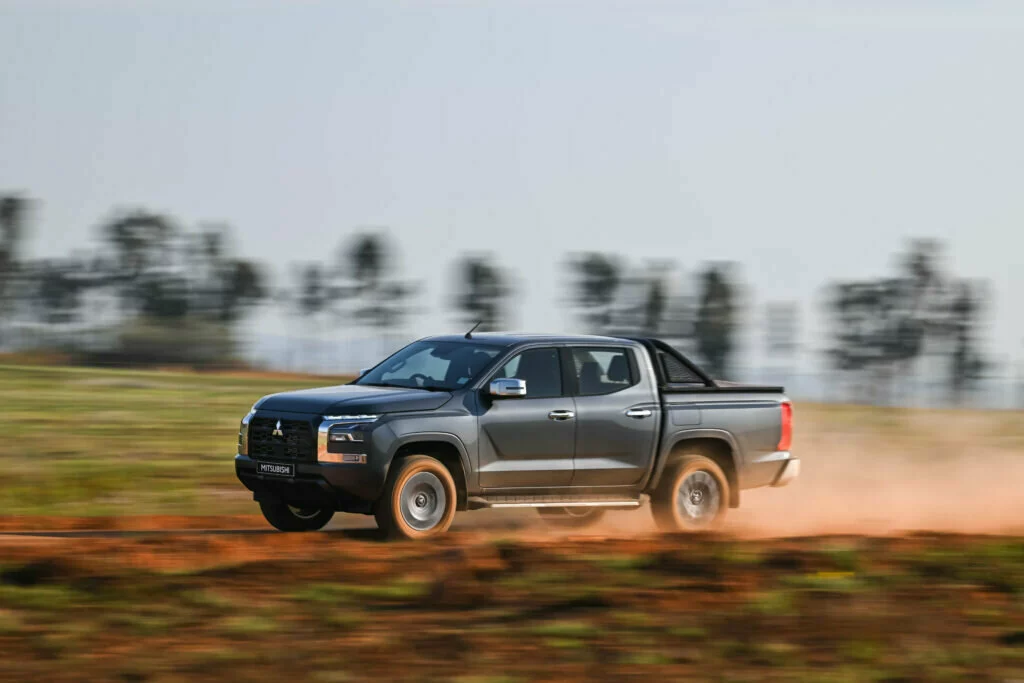
Triton vs the Bakkie Big Boys: Why Mitsubishi’s Workhorse Punches Above Its Weight

Triton vs the Bakkie Big Boys: Why Mitsubishi's Workhorse Punches Above Its Weight

April 30, 2026

The Most Competitive Bakkie Segment in the World

South Africa loves a bakkie. We use them for work, for play, for family duty, and for everything in between. And nowhere on the planet is the double-cab segment more fiercely contested than right here at home.

For decades, three names have dominated the conversation: the Toyota Hilux, the Ford Ranger, and the Volkswagen Amarok. They are the bakkies most South Africans default to without thinking twice, and they have built their dominance on years of strong marketing, deep dealer networks, and genuine capability.

But here is the question worth asking: are they actually better than the Mitsubishi Triton? Or have a lot of buyers simply not given the Triton a fair chance?

We took a closer look. The answer might surprise you.

A Quick Reminder of Mitsubishi's Bakkie Pedigree

Before we get into the comparison, it is worth remembering who Mitsubishi is.

This is the brand that has won the Dakar Rally 12 times, more than any other manufacturer in history. The Pajero became a legend on the world’s toughest motorsport stage, and that off-road DNA flows directly into every Triton built today.

Mitsubishi has been making tough, honest, capable 4x4s for over 40 years. The Triton is not a newcomer trying to break into the segment. It is a properly engineered workhorse with serious heritage behind it.

Off-Road Capability: Where the Triton Genuinely Shines

This is where the Triton starts pulling ahead, and most buyers do not realise it.

The Triton is fitted with Super Select 4WD-II, Mitsubishi’s award-winning all-wheel-drive system. Unlike many part-time 4×4 systems found in rival bakkies, Super Select 4WD-II allows you to switch between rear-wheel drive, full-time 4WD high range, locked 4WD high range, and locked 4WD low range, all on the fly.

Translation: you can drive in 4H on the highway in the rain without binding the drivetrain, switch to a locked centre diff for slippery gravel, then drop into low range for a serious off-road obstacle, all without stopping the car.

The Hilux and Ranger use traditional part-time 4WD systems, which means you cannot leave them in 4WD on tarmac. The Amarok offers permanent 4WD in some grades, but without the same level of driver-selectable flexibility.

Combined with the Triton’s seven selectable off-road drive modes (Gravel, Mud/Snow, Sand, Rock, and more), this is a properly engineered off-roader, not a styled-up commuter with a 4WD badge.

Towing, Payload, and Practicality

For the buyers who actually use their bakkies for the things bakkies are meant to do, the Triton delivers:

  • 3,500 kg braked towing capacity, matching the Hilux, Ranger, and Amarok
  • Generous load bay dimensions
  • A robust ladder-frame chassis built for hard work
  • A proven 2.4 litre bi-turbo diesel engine known for reliability and longevity

If you are towing a caravan to the coast, hauling a boat to the dam, or carrying tools to a job site, the Triton does the heavy lifting just as well as its more expensive rivals.

Standard Features: You Get More Than You Expect

Mitsubishi has loaded the Triton with features that often cost extra on competitor models. Depending on grade, expect to find:

  • Dual-zone climate control
  • 9-inch infotainment touchscreen with Apple CarPlay and Android Auto
  • Multi-view camera system for tight off-road manoeuvring
  • Adaptive cruise control
  • Forward collision mitigation and lane departure warning
  • Blind spot warning and rear cross-traffic alert
  • LED headlights
  • Leather upholstery on higher grades

When you start ticking the same option boxes on a Hilux Legend or Ranger Wildtrak, you are quickly looking at a much higher purchase price for similar (or sometimes less comprehensive) safety and convenience kit.

Where the Triton Truly Wins: Value

Here is the part that matters most to South African buyers right now.

The Triton consistently undercuts the Hilux, Ranger, and Amarok at equivalent specification levels, often by R50,000 to R100,000 or more, depending on the comparison.

That is not a small difference. That is real money you can put towards:

  • A canopy or roller shutter
  • A bull bar, rock sliders, and proper recovery gear
  • Lower monthly instalments and cheaper insurance
  • Or simply keeping more money in your pocket

When you factor in Mitsubishi’s Manufacturer’s Warranty and Service Plan along with strong residual values, the total cost of ownership story gets even more compelling.

Resale and Reliability: The Hidden Win

The Hilux has long held the crown for resale value in South Africa, and that reputation is well earned. But the Triton has quietly built a similar reputation among those who actually own one.

Mitsubishi engines are renowned for their longevity, and high-mileage Tritons are common sights on rural roads, mining sites, and agricultural operations across the country. The brand has stayed honest about what it builds: tough, mechanically simple, easy-to-service vehicles that last.

If you plan on keeping your bakkie for 10 years or 300,000 km (and many of you will), reliability matters more than badge prestige.

So Why Do So Many Buyers Default to Hilux or Ranger?

Honestly? Marketing budgets and habit.

Toyota and Ford spend enormous amounts on advertising every year. They sponsor sports teams, dominate motorsport, and have built a level of brand awareness that influences buying decisions before customers even step into a showroom.

The Triton does not have the same advertising spend behind it. What it does have is a properly engineered product, a track-record stretching back four decades, a Dakar legacy no other bakkie can match, and a price tag that rewards buyers who do their homework.

Who Should Buy a Triton?

The Mitsubishi Triton is the right choice if you:

  • Want serious off-road capability without paying flagship money
  • Need a reliable workhorse that can handle real workload
  • Value Super Select 4WD-II’s flexibility on mixed surfaces
  • Want premium safety and convenience features without the premium price tag
  • Care more about what the bakkie does than what badge is on the bonnet
  • Want strong residual value and proven mechanical reliability

If those points resonate, the Triton deserves a spot on your shortlist.

Find Out for Yourself at Mitsubishi Bronkhorstspruit

The best way to settle the bakkie debate is to drive one.

At Mitsubishi Bronkhorstspruit, we have the full Triton range available for test drive, along with our experienced sales team ready to walk you through specifications, finance options, trade-in valuations, and delivery.

We have proudly served the Bronkhorstspruit community and surrounding areas, and we would be glad to show you why so many of our customers are switching from the so-called “Big Three” and never looking back.

Visit Mitsubishi Bronkhorstspruit, call our sales team to book a test drive, or send us an enquiry online for a personalised quote

Stop paying more for a badge. Start driving a bakkie that earns its place.

Operating Hours
Monday – Friday
07:00AM – 05:00PM
Saturday
08:00AM – 01:00PM
Sunday
Closed
Mitsubishi Bronkhorstspruit
013 932 6410
47 Lanham Street, Bronkhorstspruit, 1020
© Copyright 2026 - Mitsubishi Bronkhorstspruit - Platform by Digi Cars Group of Companies. All Rights Reserved. Errors and Omissions Omitted. Terms and Conditions Apply. Financing is subject to a 3rd party approval process.